Hurricane season officially starts June 1, and for Jacksonville homeowners, the trees in your yard deserve a closer look before then. NOAA's official 2026 Atlantic outlook is released on May 21, and early pre-season forecasts from Colorado State University and Tropical Storm Risk are calling for a slightly below-normal season due to expected El Niño conditions. That's good news — but a quieter season still produces memorable storms, and a single tropical system is enough to bring down a tree that's been quietly failing for months. [HotAir] [Wikipedia]
After years of tree work across Duval, Clay, and St. Johns counties, one pattern stands out: most of the trees we remove after storms showed warning signs well before the wind arrived. This checklist covers what to look for, and what to do about it.
Why Jacksonville Trees Take Extra Wind Stress
A few factors specific to Northeast Florida are worth knowing:
- Sandy coastal soils don't grip roots as firmly as clay. After heavy pre-storm rain, larger trees lose anchorage faster.
- Fast-growing species like water oak, laurel oak, and Bradford pear are common in Jacksonville yards and tend to fail more often than slower-growing natives.
- A mature canopy. Many of the trees shading Riverside, Avondale, San Marco, and Ortega were planted 60–80 years ago. They're beautiful, and several species are now reaching the end of their typical lifespan.
The 12-Point Pre-Season Tree Inspection
Walk your property and take a close look at each significant tree:
- Lean. More than 15 degrees, or any lean that's changed recently.
- Vertical cracks in the trunk longer than 12 inches.
- Mushrooms or fungal conks at the base — a sign of internal decay.
- Hollow sound when you tap the trunk with a rubber mallet.
- Dead branches in the canopy that haven't dropped yet.
- Co-dominant stems with included bark — two main trunks in a tight V often split in storms.
- What's underneath. Roof, driveway, power lines, vehicles.
- Recent construction nearby. Trenching or heavy equipment within the drip line in the last three years can damage roots in ways that show up in the next storm.
- Raised or cracked soil at the base.
- Sparse or thinning canopy compared to similar trees nearby.
- Heavy vine growth. Smilax and wild grape act like a sail.
- Distance to the house. If a tree is closer to your home than it is tall, it's worth a professional assessment.
Three or more signs on a single tree is a good reason to get an arborist out before June 1.
Species Worth Watching in Jacksonville
A few species we remove most often after storms:
- Water Oak and Laurel Oak — common, short-lived (60–80 years), and prone to hidden interior decay.
- Slash Pine and Sand Pine — tall, top-heavy, and shallow-rooted in our soils.
- Bradford Pear — known for splitting at the crotch as the tree matures.
- Queen Palm — significantly less wind-tolerant than our native sabals.
On the other end of the scale, Live Oak, Southern Magnolia, Bald Cypress, and Sabal Palm are among the most hurricane-resistant trees in our climate. If you're replacing or replanting, these are the stronger long-term choices.
What to Do in May
The single biggest mistake is waiting until a storm is named. Once a system enters the cone for Florida, every reputable tree service in Jacksonville is booked, and pricing reflects the urgency.
Worth doing this month:
- Schedule a tree risk inspection
- Remove any high-risk trees
- Prune deadwood and thin dense canopies so wind passes through
- Document trees with photos for your insurance records
Worth avoiding:
- "Hurricane cuts" or aggressive topping. Topped trees grow back with weak, brittle limbs and become more dangerous over time, not less. A good arborist will recommend better alternatives.
- Lion-tailing (stripping interior branches). Same problem — less stable, not more.
Once a Storm Enters the Cone
When a system is forecast for Florida:
- Clear gutters and downspouts
- Pick up any deadwood already on the ground
- Move outdoor furniture, grills, and lighter items inside
- Park vehicles away from larger trees
- Skip last-minute DIY trimming — emergency room visits from chainsaw and ladder accidents spike in the 48 hours before landfall
Choosing the Right Tree Service
Hurricane season brings out a wave of out-of-town operators. A few things to verify before hiring:
- Florida licensing and insurance (general liability and workers' comp)
- An ISA Certified Arborist involved in the assessment
- A written estimate, not a number quoted from the cab of a truck
- Recent reviews from Jacksonville-area customers
For any tree near a structure, an arborist's assessment is worth the small upfront cost.
After the Storm
If a tree comes down on your house:
- Get everyone clear and assume any wire touching the tree is live
- Call 911 for downed power lines or structural damage
- Photograph everything before it's moved (for your insurance claim)
- Contact your insurance carrier
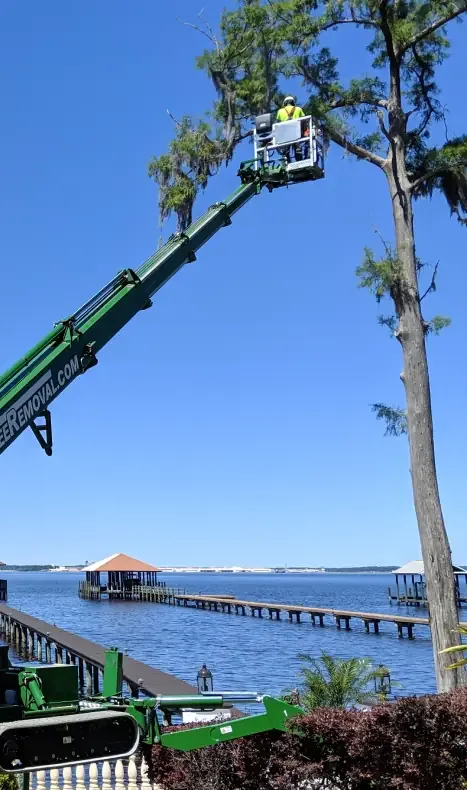
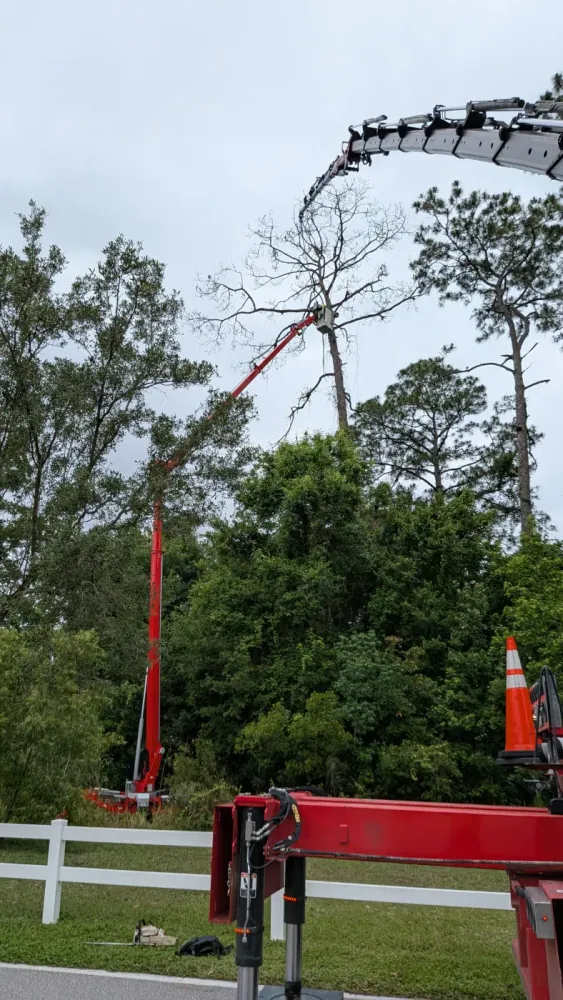
- Hire a tree service with cranes, proper rigging, and storm experience — not a small crew with a pickup
We provide emergency tree removal across Jacksonville, Orange Park, Fleming Island, and the Beaches throughout hurricane season, day or night.
The Bottom Line
The trees that cause the most damage in hurricanes are rarely the obvious ones. They're usually the leaning oak that's been on the to-do list, or the pine with a fungal conk no one noticed. A 30-minute walk around your yard with this checklist is the highest-value hurricane prep most homeowners can do.
If you'd like a free on-site tree risk assessment before June 1, give us a call or book online. Availability gets tight quickly once the National Hurricane Center starts naming storms.
— Tom Jackson, Jax Tree Removal