"Do I need a permit to remove a tree on my own property?" It's one of the most common questions Jacksonville homeowners ask, and the answer is more nuanced than yes or no. The City of Jacksonville has one of the more involved tree-protection ordinances in Florida, but it also includes significant exemptions for single-family residential property.
Here's a plain-English walkthrough of what the rules actually say, when you do need a permit, when you don't, and what happens if you skip a required one.
The Short Answer
For most single-family residential property owners in Jacksonville, you can remove most trees without a permit, with important exceptions. The exceptions involve:
- "Exceptional specimen" trees (very large or rare native species)
- Trees in designated scenic or historic corridors
- Trees in city rights-of-way or easements
- Work on undeveloped land, commercial property, or property being developed
- Communities with HOA rules that go beyond city requirements
For routine residential removal of common species like water oak, laurel oak, or aging Bradford pears, you're typically not dealing with a city permit — though HOA rules may still apply.
The Actual Ordinance: Chapter 656, Part 12
The City of Jacksonville's tree protection rules live in Chapter 656, Part 12 of the Zoning Code (often referenced as the "Landscape and Tree Protection Regulations"). The key sections for homeowners:
- Section 656.1203(bb) defines "protected trees"
- Section 656.1205 prohibits removal of protected trees without permit, and lists exemptions
- Section 656.1206 covers the permit application process and criteria
The general rule from Section 656.1205: "No protected tree shall be cut down, removed, damaged or destroyed... without first having obtained a permit."
That sounds restrictive, but the exemptions in the same section are extensive — particularly for single-family residential lots.
What Counts as a "Protected Tree"
Under the ordinance, a "protected tree" generally means any tree with a trunk diameter at breast height (DBH) of 8 inches or greater, with several specific exclusions. Trees that are NOT protected — meaning they can typically be removed without a permit — include:
- Pine species other than Long Leaf Pine (Slash Pine, Sand Pine, Loblolly Pine all fall outside protection)
- Palm species other than the Cabbage/Sabal Palm (so Queen Palms, Washingtonia Palms, etc. are not protected)
- Recognized invasive species including Chinese Tallow, Camphor, Chinaberry, Paper Mulberry, Golden Raintree, Pond Willow, and Wax Myrtle
- Trees considered nuisance species under the ordinance
- Dead trees (subject to verification)
This is a meaningful point: many of the most commonly removed trees in Jacksonville yards — invasive species, palms other than sabals, and most pines — don't require permits to begin with.
The Residential Exemptions
Even for trees that meet the "protected" definition, the ordinance includes important exemptions for residential property. Section 656.1205 specifically provides exemptions for trees located on:
- Lots on which a single-family dwelling or a mobile home is located
- Property within an existing or proposed right-of-way under approved subdivision construction plans
- Property that has been subdivided for residential development with approved plats
The single-family residential exemption is the broadest of these and is what allows most Jacksonville homeowners to remove trees without going through a permit process for routine landscape work.
However — and this is important — the exemption is not absolute. Even on exempt property:
- "Exceptional specimen" trees may still have protection
- Work must still comply with HOA rules
- Work near city rights-of-way may have additional requirements
- Tree mitigation requirements may apply in some specific cases
When You Definitely Need a Permit
Even as a single-family residential property owner, you should expect to deal with permits or formal approvals when:
- The tree is in or extends into a city right-of-way
- The tree is within a designated scenic corridor
- The tree qualifies as an "exceptional specimen" under the ordinance
- The property is in a historic district with additional landscape rules
- You're doing work as part of new construction, an addition, or significant site development
- Your HOA requires architectural review approval for tree removal
If any of these apply, the safest approach is to consult with a qualified tree service or the City of Jacksonville Planning and Development Department before scheduling work.
HOA Rules: Often More Restrictive Than the City
For many Jacksonville homeowners, the HOA rules in your community are what actually controls tree removal — not the city ordinance. HOA tree rules commonly include:
- Required approval from an architectural review committee before any tree removal
- Approved species lists for replacement plantings
- Minimum tree count or density requirements per lot
- Front-yard versus back-yard restrictions
- Notification requirements for neighboring properties
- Specific contractor or work-hour requirements
Violation of HOA tree rules can result in fines, required replacement, and ongoing compliance issues. Even when city rules don't apply, HOA rules often do.
What Happens If You Skip a Required Permit
The consequences of removing a protected tree without a required permit can be significant:
- Civil fines from the City of Jacksonville (these can be substantial for "exceptional specimen" trees)
- Mitigation requirements — being ordered to replant a specified number of replacement trees
- HOA fines on top of city penalties where applicable
- Title and disclosure issues if the violation is documented and not resolved before sale
- In rare cases, criminal penalties for repeated or egregious violations
The penalty math almost always favors getting the permit (or confirming exemption) up front rather than dealing with consequences after the fact.
How the Permit Process Actually Works
For situations where a permit is required, the typical process:
- Application submitted to the City of Jacksonville's Planning and Development Department
- Site review by city staff, which may include an on-site inspection
- Determination of whether removal is approved, approved with conditions (often including mitigation/replacement trees), or denied
- Permit issued if approved, with specific conditions
- Work completed in compliance with the permit terms
- Final inspection in some cases
The process is generally manageable but can take several weeks. For storm emergencies and immediate hazards, expedited processes may apply.
Working With a Tree Service That Knows the Rules
A reputable Jacksonville tree service should be able to:
- Identify whether your specific tree is protected, exempt, or borderline
- Advise whether a permit is likely required
- Recognize exceptional specimen trees that need special handling
- Help you navigate the application process if needed
- Coordinate with HOA architectural review where required
- Document the work appropriately
If a tree service tells you "permits don't apply here" without any actual evaluation of your tree and property, that's a warning sign.
A Special Note on Storm Emergencies
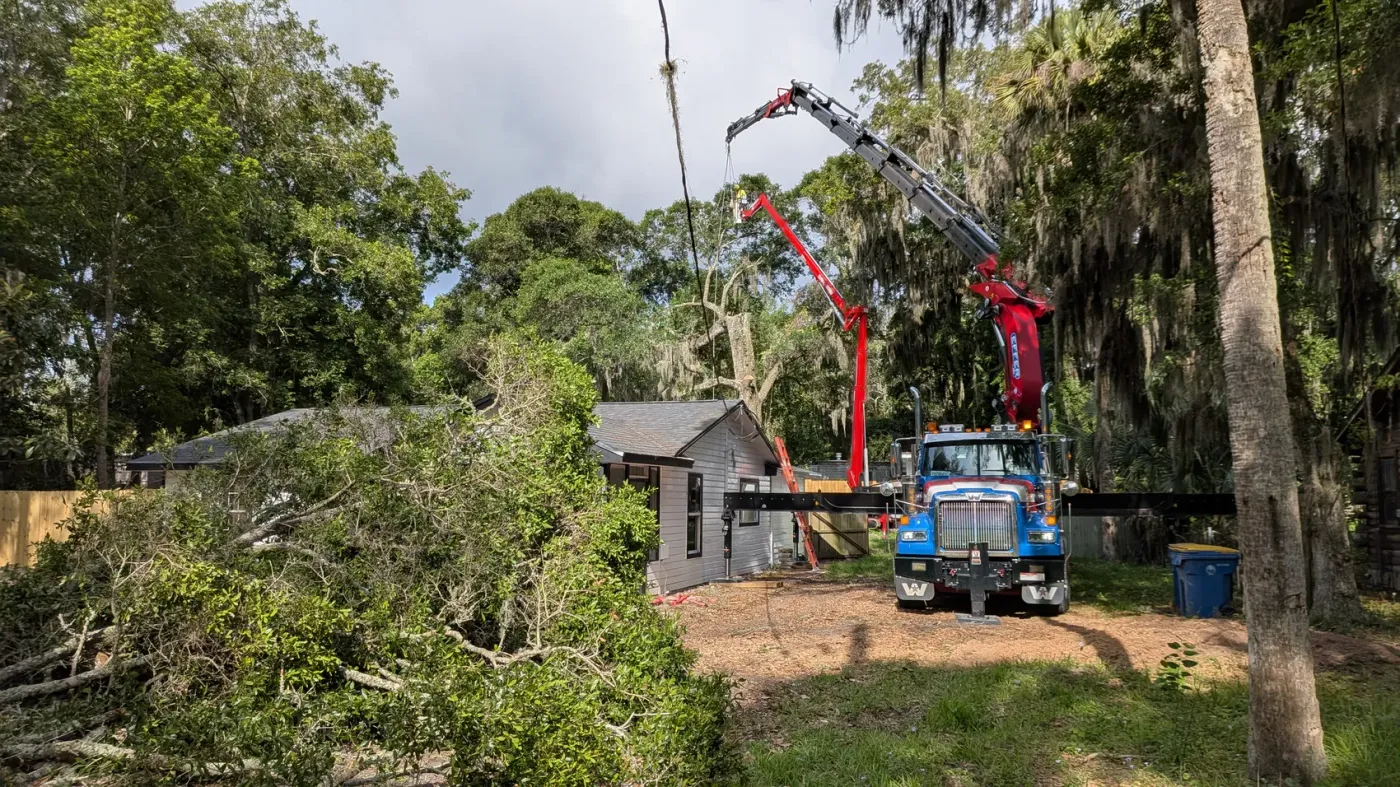
After major storms, the city typically operates under expedited or modified permit processes for emergency removal. Trees that pose an immediate hazard to people or structures can usually be removed without going through normal permit timelines. Documenting the emergency condition with photos before removal is important for both compliance and insurance purposes.
The Bottom Line
For most Jacksonville homeowners removing common trees on their own residential property, the permit question is simpler than the ordinance language suggests. The single-family residential exemption covers most routine work. Where it doesn't, the process is manageable but worth navigating carefully.
HOA rules, exceptional specimen trees, work near rights-of-way, and historic district considerations are where most homeowners actually need to slow down and verify before cutting. A qualified tree service can help sort out which of these apply to your specific situation.
If you have a tree removal question and you're not sure whether permits or approvals apply, we offer free on-site consultations. We'll help you understand exactly what — if anything — your project will require.
— Tom Jackson, Jax Tree Removal