"How much does tree removal cost?" is the most common question we get, and most online answers are either too vague to be useful or wildly off-base for our specific market. Jacksonville tree removal pricing has its own realities — driven by our specific tree species, hurricane season demand cycles, fuel and disposal costs, and the access challenges of working on Northeast Florida properties.
Here's an honest, current pricing guide for what you should actually expect to pay for tree work in Jacksonville in 2026, what drives the price up and down, and how to spot a quote that's too good to be true.
Typical Tree Removal Pricing in Jacksonville (2026)
These ranges reflect what reputable, properly insured tree services in the Jacksonville area are charging this year. Lower-end pricing typically reflects easier access and smaller trees; higher-end reflects complex removals, large trees, or restricted access.
- Small trees (under 30 feet): $250–$700
- Medium trees (30–60 feet): $700–$1,800
- Large trees (60–80 feet): $1,500–$3,500
- Very large trees (80+ feet): $3,000–$8,000+
- Emergency / storm-damaged removal: typically 10–30% above standard rates
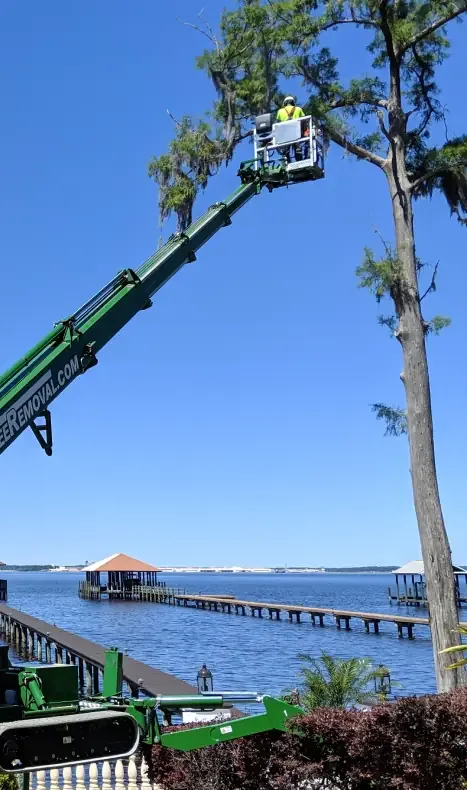
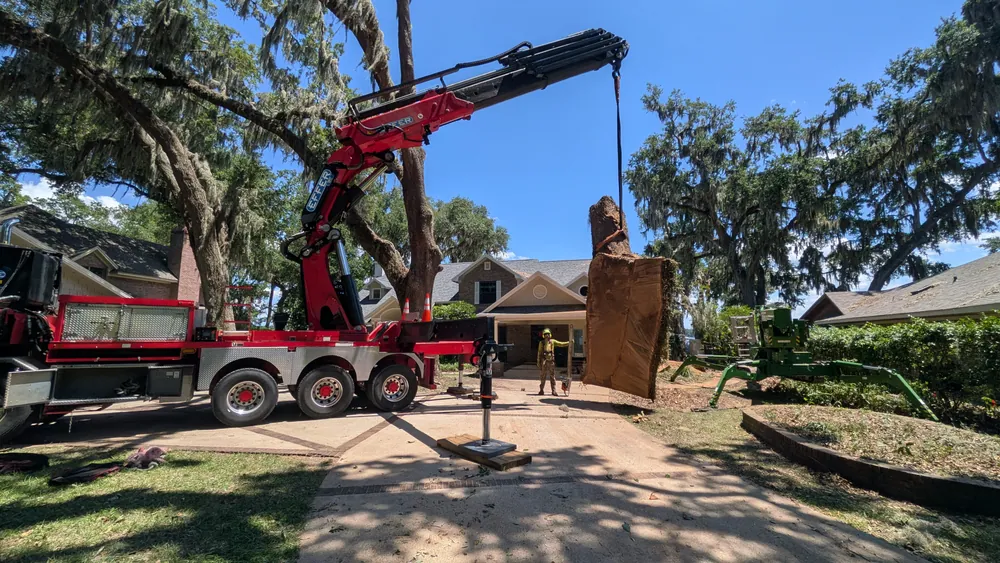
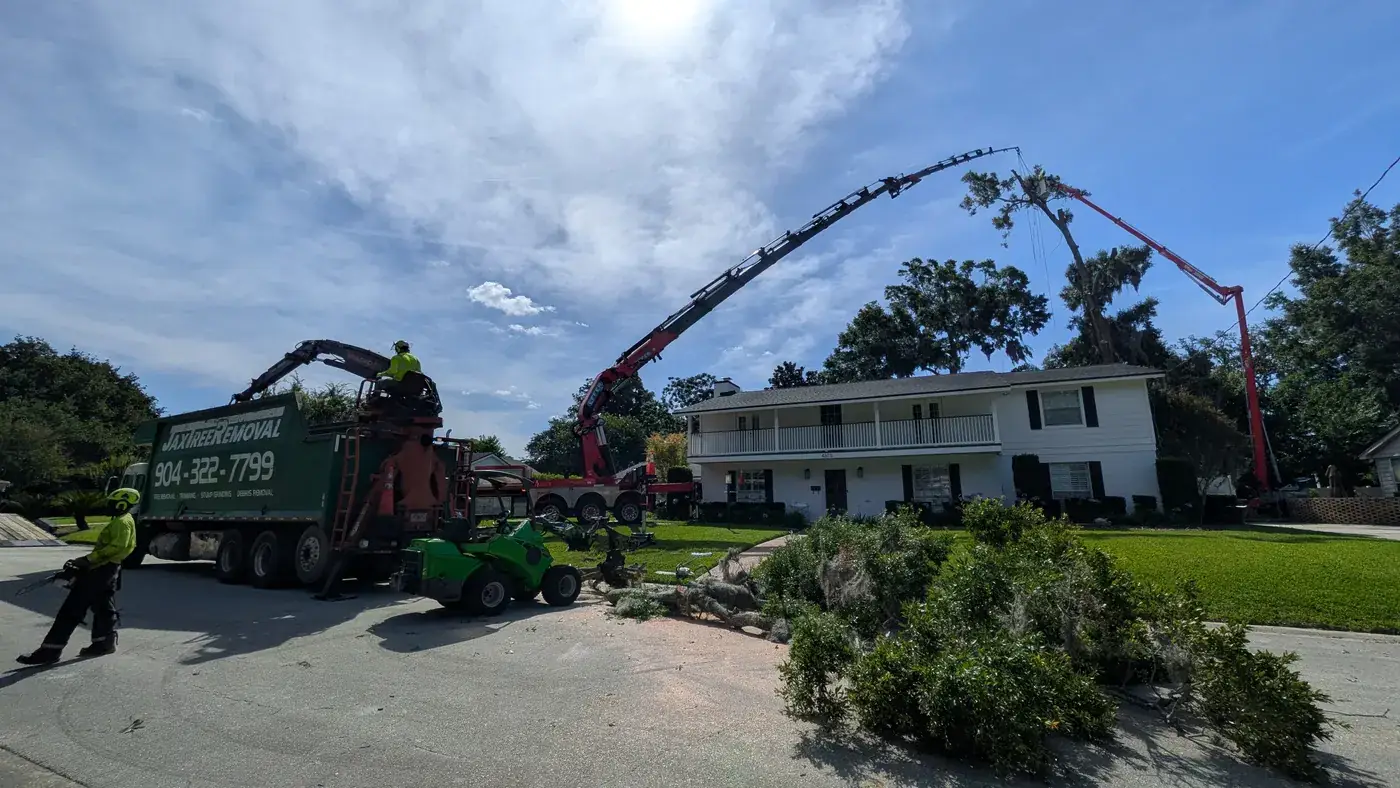
- Crane-assisted removal: adds $1500–$3500+ depending on tree and crane time
- Stump grinding: $100–$800 per stump (sometimes priced by diameter)
- Palm trimming: $85–$350 per palm depending on height and species
- General tree trimming: $300–$3,500 per tree
These are real working ranges, not lowball estimates designed to get a foot in the door.
What Actually Drives the Price
The same tree on two different properties can have wildly different removal costs. The variables that matter:
Tree Size
The single biggest factor. Tree removal cost scales roughly with the cube of the tree's height — a 60-foot tree isn't twice as expensive as a 30-foot tree; it's often three or four times as expensive. More wood, more labor, more disposal volume, more rigging required.
Tree Condition
Healthy trees are easier to remove safely than dead, decayed, or storm-damaged trees. A dead pine with extensive internal decay is significantly more dangerous to remove than a healthy tree of the same size, and pricing reflects that.
Access
This is the variable that most surprises homeowners. The same tree in an open front yard with truck access is dramatically cheaper to remove than the same tree in a tight backyard reached through a 4-foot gate.
- Open access with bucket truck and chipper at the tree: lowest cost
- Crane access from the street: moderate cost increase, often safer for large trees
- Backyard access requiring drag distance: higher cost
- Tight access requiring small equipment and extensive rigging: highest cost
- Properties requiring fence removal or neighbor coordination: additional cost
Proximity to Structures, Power Lines, and Other Targets
A tree in the middle of a clear lawn can simply be felled. A tree six feet from your roof requires careful, piece-by-piece dismantling and proper rigging. The latter takes 3–4 times longer and requires significantly more skill.
Species
Different species require different approaches:
- Hardwoods like oak — dense wood, more chipping time, more disposal volume
- Pines — generally faster but with their own rigging considerations
- Palms — typically lower cost per tree
- Trees with toxic sap or wood (some camphors, certain ornamentals) — handling and disposal considerations
Disposal and Cleanup Standards
"Cleanup" means very different things to different contractors. Specifically:
- Hauling all debris off-site (standard from reputable services)
- Leaving wood for the homeowner (sometimes a cost reduction option)
- Stump removal (almost always priced separately)
- Replacing damaged sod or landscape (some include, some don't)
- Raking and removing all leaf debris (varies)
A bid that's significantly below others is often cutting cleanup standards. Verify exactly what's included before signing.
Permits and Coordination
Where permits apply (certain protected trees, HOA-restricted communities, work near right-of-way), the time and cost of obtaining approvals gets built into the quote.
Insurance and Licensing
This is the line item where the difference between a reputable service and a cut-rate operator becomes most clear. Proper general liability and workers' compensation insurance is expensive — and necessary. A contractor who's saving on insurance can quote dramatically lower, but you, the homeowner, become liable if something goes wrong.
Hurricane Season Pricing
Jacksonville tree pricing follows predictable seasonal patterns:
- Spring (March–May): Standard pricing, good availability — best time to schedule non-emergency work
- Pre-season (May, especially May 15+): Demand starting to climb as homeowners do hurricane prep
- Active hurricane season (June–November): Standard pricing for scheduled work, premium pricing for emergency response
- Post-storm (24–72 hours after a major storm): Emergency response only, premium pricing reflects 24/7 operation and equipment positioning
- Storm recovery period (weeks following a major storm): Elevated pricing across all services due to demand exceeding capacity
- Winter (December–February): Standard pricing, often the best availability of the year
The biggest savings opportunity: schedule routine work in winter or early spring. The biggest cost trap: waiting until a storm is named.
What "Too Good to Be True" Looks Like
Bids that come in dramatically below others — sometimes 40% or 50% less — usually have one or more of these issues:
- No insurance, or expired insurance
- No proper licensing for the work being performed
- Out-of-state contractors after major storms
- Cash-only requirements with no written contract
- Cleanup not actually included
- No disposal — debris simply moved to a corner of the lot
- Stump excluded (and then quoted separately at premium pricing)
- Door-to-door solicitations after storms
If something feels off about a low bid, it probably is. The cost of damage caused by an uninsured tree service to your home can exceed the original removal cost by 10x or more.
How to Get a Realistic Quote
- Get at least three quotes for any significant work.
- Verify Florida licensing and insurance — ask for certificates, don't just take a verbal answer.
- Insist on written estimates that itemize what's included.
- Ask specifically about cleanup, stump, and disposal.
- Check recent reviews from Jacksonville-area customers.
- Ask about the equipment they'll use for your specific job.
- Don't pay large deposits for routine work. Payment is typically due on completion.
Insurance Coverage for Tree Removal
Standard homeowner's insurance in Florida generally covers:
- Tree removal when a tree has fallen on or damaged the home
- Emergency tarping and immediate damage control
- Sometimes preventive removal of trees damaged by storms but not yet fallen
What's typically NOT covered:
- Removal of trees that haven't damaged anything, even if they're dead or dangerous
- Landscape cleanup beyond what's necessary to access the structure
- Tree health issues or preventive removal
Coverage varies significantly by carrier and policy. When in doubt, call your agent before assuming.
The Bottom Line
Jacksonville tree removal pricing is what it is for real reasons — labor, equipment, insurance, disposal, and the specific challenges of working on Northeast Florida properties. The honest middle of the market is usually the right place to be. Far below it usually means cut corners somewhere. Far above it usually means you're paying for something specific (crane access, complex removal, premium scheduling) that may or may not be needed for your job.
We're happy to provide free, written estimates for any tree work on your Jacksonville-area property. We'll explain exactly what's included, what isn't, and why — so you can compare apples to apples with other quotes you get.
— Tom Jackson, Jax Tree Removal